The short answer
To massage your scalp for hair growth, use the pads of your fingertips (not your nails), press firmly enough to move the skin over the skull, and work in small circles from the hairline to the crown for about 4 to 5 minutes a day. The research is small but encouraging: a 2016 study found thicker hair after 24 weeks of daily 4-minute massage. Massage works best as one part of a routine that also feeds the follicle from the inside, which is why we pair it with a daily biotin gummy.
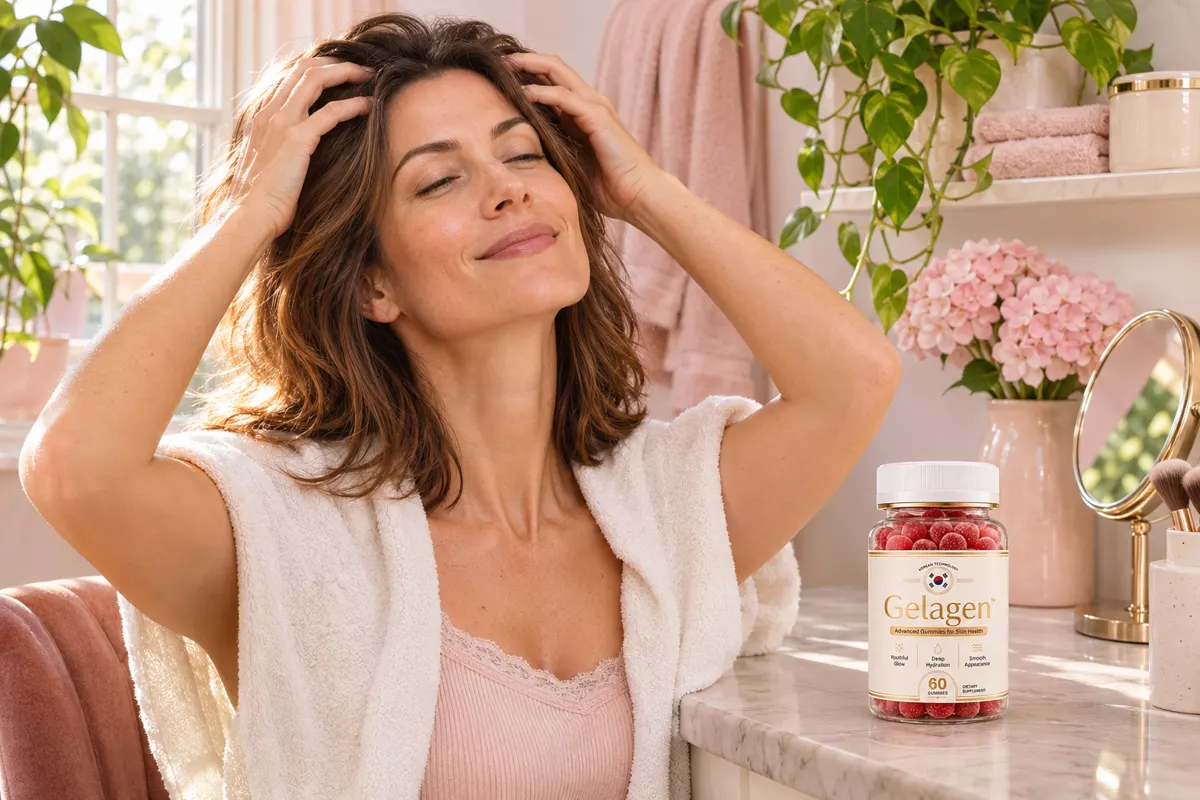
Searches for “how to massage your scalp for hair growth” have doubled in recent months in the US, and “does scalp massage help hair growth” is close behind. It is easy to see why: scalp massage is free, it feels good and it takes a few minutes. The catch is that most videos show quick, light rubbing, while the one study everyone cites used a slow, firm, standardized technique. Technique is what separates a pleasant habit from a useful one.
This guide walks you through the movements, how long and how often, the most common mistakes and an easier version for busy days. It is written for women who want fuller, healthier-looking hair and are willing to give it a few months.
What the research actually shows
The most-cited paper is a small Japanese study published in Eplasty in 2016 (Koyama and colleagues). Nine healthy men received a standardized 4-minute scalp massage every day for 24 weeks. Hair growth rate and the number of hairs did not change significantly, but hair thickness increased. In the lab, the researchers saw that stretching forces changed gene activity in dermal papilla cells, the cells at the base of the follicle that steer hair growth.
A larger follow-up in Dermatology and Therapy (2019) surveyed 340 people with pattern hair loss who followed a standardized massage routine twice a day. About 69% reported that their hair loss had stabilized or improved, and results were better in people who massaged longer and more consistently. That was self-reported, with no control group, so it is a signal, not proof.
What this means in practice: scalp massage is a low-risk habit that may help hair look thicker over months, especially when done the right way and every day. It is not a replacement for a medical plan if you have pattern thinning, and sudden or patchy hair loss always deserves a visit to a dermatologist. If you are unsure what kind of hair loss you have, our guide to hair breakage vs. shedding is a good place to start.
Before you start: hands, hair and pressure
- Fingertip pads, short nails. Nails scratch the skin and can break hair. Use the soft part of your fingertips.
- Move the skin, do not rub the hair. The goal is to slide the scalp over the skull. If your fingers glide over the hair, press a little more.
- Firm but comfortable. Think of the pressure you would use to knead dough gently. It should never hurt.
- Dry or in the shower. Both work. In the shower, shampoo lather helps your fingers glide; on dry hair, you can massage before bed.
The 5 movements, step by step
| Movement | How to do it | How long / how often |
|---|---|---|
| 1. Hairline circles | Place fingertips along the front hairline and make small, slow circles, moving the skin | About 1 minute, daily |
| 2. Side press and lift | Spread fingers above the ears, press in, then push the skin gently up toward the crown and release | About 1 minute (10 to 15 lifts) |
| 3. Crown kneading | Fingertips of both hands on the top of the head, knead in small circles, then shift a finger-width and repeat | About 1 minute |
| 4. Pinch and stretch | Gently pinch a small fold of scalp skin between thumb and fingers, lift for 2 seconds, release, move on | About 1 minute (the “stretching” idea from the study) |
| 5. Nape glide | Finish at the base of the skull with slow circles and long strokes up from the neck | 30 to 60 seconds |
Total: 4 to 5 minutes once a day, the dose used in the 2016 study. The 2019 survey used a twice-daily routine. Timings above are a practical split, not a medical prescription.
Movement 1: hairline circles
Sit or stand with your shoulders relaxed. Put the pads of your index, middle and ring fingers on your hairline at the temples. Press until you feel the skin move, then draw small circles about the size of a coin. After 5 or 6 circles, move toward the center of the forehead and repeat. Common mistake: going fast. Slow circles move the skin; fast ones just rub hair. Easier version: one hand at a time while you read or watch TV.
Movement 2: side press and lift
Spread your fingers like a claw above each ear. Press in, then lift the skin slightly upward, as if you were trying to move your scalp toward the ceiling. Hold for a second, release and move your hands a little higher. Common mistake: pulling the hair instead of the skin. Easier version: just press and release in place without the lift.
Movement 3: crown kneading
The crown is where many women first notice thinning, so give it a full minute. Place both sets of fingertips on top of the head, knead in small circles for a few seconds, then move a finger-width over and continue until you have covered the whole top. Common mistake: massaging only one spot. Easier version: do this one in the shower while your conditioner sits.
Movement 4: pinch and stretch
This movement is the closest to the stretching technique described in the study. Use your thumb and two fingers to gently pinch a small fold of scalp, lift it slightly for about two seconds and let go. Work across the top of the head. If your scalp is tight and will not fold, simply press your fingertips in and push them toward each other. Common mistake: pinching too hard or grabbing hair. Easier version: skip it on busy days and keep movements 1 and 3.
Movement 5: nape glide
End at the back of the head. Make slow circles where the skull meets the neck, then draw long, light strokes upward from the nape. Many people find this part the most relaxing, which matters: the American Academy of Dermatology lists stress as a common trigger for extra shedding, and our guide on how to stop stress hair loss covers the rest of that picture.
Fingers, brush or massager?
A soft silicone scalp massager or a scalp massage brush can make the routine easier, especially in the shower, and the 2016 study actually used a handheld device. Choose one with soft, rounded tips, use light pressure and keep it clean and dry between uses. Fingers are just as good if you are consistent. What matters is the daily minutes, not the gadget.
The mistakes that waste your effort
- Scratching with nails. Irritated, scratched skin is the opposite of what you want.
- Rubbing too hard. Vigorous rubbing can tangle and break hair. Firm, slow pressure is enough.
- Doing it twice a week. The studies used daily routines for months. Consistency beats intensity.
- Stopping after three weeks. A hair cycle is long. Judge results at 3 to 6 months with photos, not in the mirror every morning.
- Massaging an irritated scalp. If you have redness, scaling, sores or pain, skip massage and see a dermatologist first.
- Forgetting the inside. Massage works on the scalp; follicles still need protein, iron and B-vitamins to build each new hair.
Where massage fits in a full hair routine
Think of scalp massage as the outside half of the job. The inside half is nutrition: hair is built from keratin, and your body relies on biotin and other B-vitamins to make it. That is why a simple routine works best: a few minutes of massage, gentle styling, a plate with enough protein, and steady daily support from a gummy such as Gelagen. If you like the idea of a do-it-yourself approach, our article on rosemary rice water for hair growth looks at the popular home remedies and what they can realistically do.
Track your progress the easy way: one photo of your part and crown once a month, same light, same angle. Our simple photo and notes log shows how.
Our recommendation: Gelagen
Scalp massage helps on the outside; Gelagen is the daily gummy we recommend for the inside. It combines Biotin (vitamin B7), which your body needs for normal keratin production, with Pantothenic Acid (B5), B6, B12 and Folate, in two berry-flavored gummies a day. Pair it with your 5-minute massage and you cover both sides of healthy-looking hair: circulation and stretch on the scalp, building blocks from within.
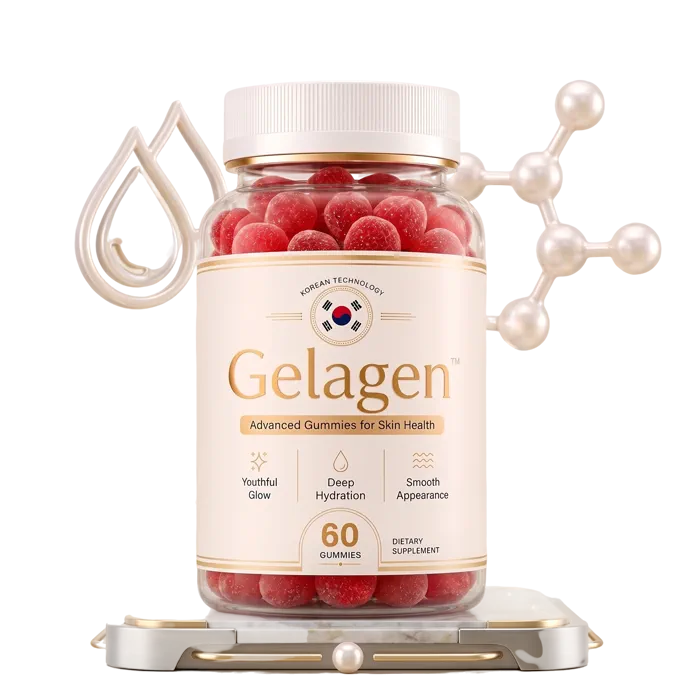
- Made for hair, skin and nails: biotin plus the B-vitamin team your body uses for normal hair growth.
- Fits any routine: two gummies a day at the label serving, easy to take right after your evening massage.
- Clear pricing: $79 per bottle for two bottles ($158), $69 per bottle for three ($207) or $49 per bottle for six ($294); the 3- and 6-bottle bundles ship free.
- Low-risk to try: made in an FDA-registered US facility, a one-time purchase with no subscription, and a 60-day money-back guarantee.
Give the combination 3 months: daily massage, daily gummies and a monthly photo. That is how you will see what it does for your hair.
Frequently asked questions
Does scalp massage help hair growth?
Small studies suggest it can help hair look thicker. A 2016 study found thicker hair after 24 weeks of a daily 4-minute massage, though growth rate and hair count did not change significantly. A 2019 survey of 340 people found most reported stabilization or improvement with twice-daily massage. The evidence is limited, but the habit is low-risk.
How long should I massage my scalp for hair growth?
About 4 to 5 minutes a day, the dose used in the main study. Some people split it into two shorter sessions, morning and night. Doing it every day for several months matters more than doing longer sessions now and then.
Should I massage my scalp wet or dry?
Either works. In the shower, shampoo lather helps your fingers glide over the scalp. On dry hair, massage before bed or while relaxing. Use your fingertip pads, never your nails.
Can scalp massage cause hair loss?
Gentle massage does not cause hair loss, though you may notice hairs that were already shedding come out during it. Very vigorous rubbing can tangle and break hair, so keep the pressure firm but slow and comfortable.
When will I see results from scalp massage?
Give it at least 3 months, and judge with monthly photos of your part and crown. The study that found thicker hair lasted 24 weeks, about 6 months.
Can I combine scalp massage with a biotin gummy?
Yes. Massage works on the scalp and a gummy such as Gelagen supports hair from the inside with biotin and B-vitamins, so they complement each other. If you are pregnant, breastfeeding, take medication or have a scalp condition, check with your doctor first.
The bottom line
How to massage your scalp for hair growth comes down to technique and consistency: fingertip pads, firm slow circles that move the skin, 4 to 5 minutes a day, for months. The evidence is small but points to thicker-looking hair. Pair the outside habit with steady inside support, like a daily Gelagen gummy, and track your progress with monthly photos.
This article is general information, not medical advice, and it does not replace a visit to your doctor or dermatologist. Sources: Koyama et al., Eplasty 2016 (PubMed 26904154); English and Barazesh, Dermatology and Therapy 2019; American Academy of Dermatology public pages on hair shedding.