The short answer
To strengthen weak nails, start with what costs nothing: keep them short, file in one direction and rub an ointment or cuticle oil into the nails after every hand wash. Then protect them from water and harsh polish removers for a week, adjust your routine and kitchen, and finally support new growth from the inside with protein, biotin and the B-vitamins your nails are built from. Each step below does a different job, and the last one ties them all together.
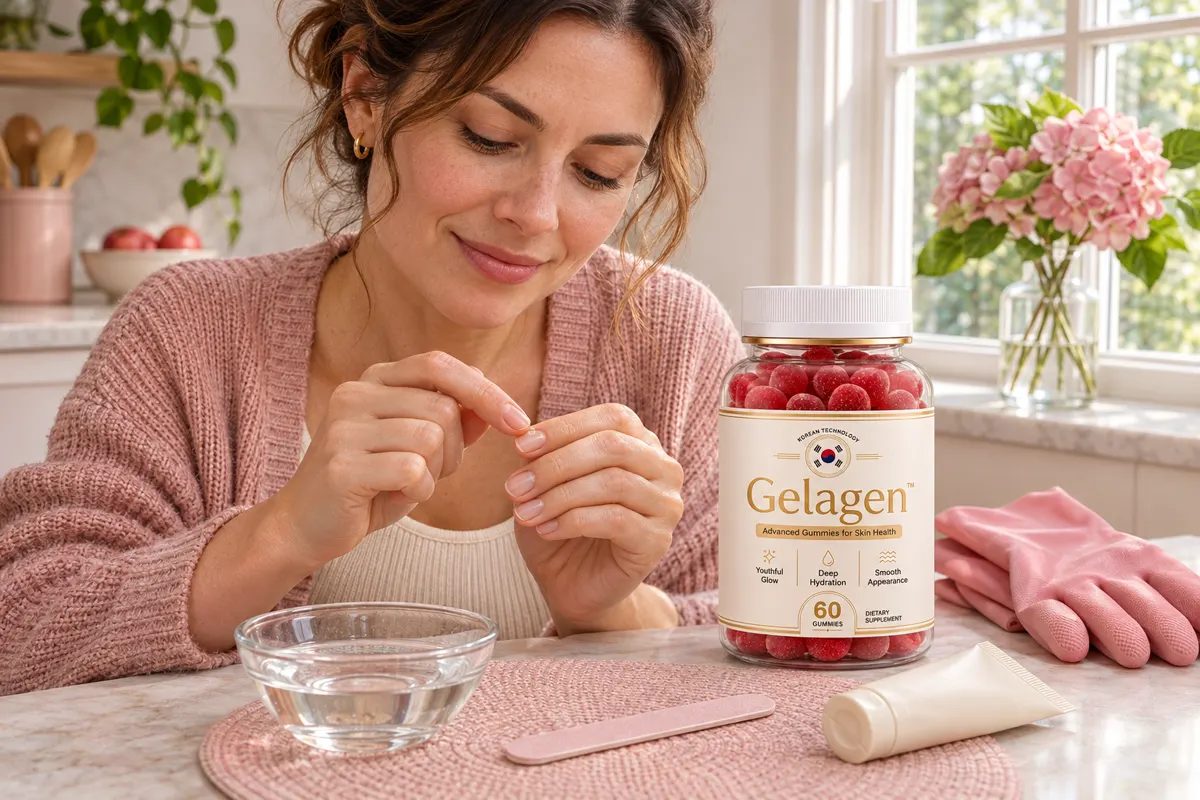
“How to strengthen weak nails” is one of the fastest-rising nail searches in the US right now, together with “what can I put on my nails to strengthen them.” The honest reason it is so common: weak, bendy, peeling nails rarely have a single cause. Water, dryness, filing habits, gel removal, a rushed diet and simple age all play a part, so a single “miracle” product rarely fixes it.
What works is a ladder. You start on the lowest step, which takes two minutes and costs nothing, and you climb only as far as you need. Below, every step tells you what it fixes and where it stops, so you know exactly why the next one exists.
First, why nails get weak
Your nail plate is made of layers of keratin, a protein, held together with a little water and natural oils. When those layers dry out, get soaked and dried over and over, or are scraped by filing and harsh removers, they start to split, peel and bend. Nails also reflect what they are built from: protein, iron and B-vitamins such as biotin. The American Academy of Dermatology’s nail tips focus on exactly these everyday factors: moisture, gentle filing, gloves and not using nails as tools.
Because fingernails grow only about 3 to 3.5 mm a month, any change you make shows up slowly, from the base of the nail toward the tip. That is the most important number in this article: expect to judge results in months, not days.
The ladder at a glance
| Step | Effort | What it fixes | Its limit |
|---|---|---|---|
| 1. The 2-minute fix | Free, today | Dryness, rough edges, snags that turn into tears | Protects the nail you have; does not change how new nail grows |
| 2. One-week habit | Free, 7 days | Water damage, removers, gel and acrylic stress | Stops the damage; does not rebuild the plate |
| 3. Routine and home tweaks | Small cost | The daily triggers you no longer notice | Still works only from the outside |
| 4. The complete solution | Daily gummy + steps 1–3 | Steady building blocks for every new millimetre of nail | Needs patience: 8 to 12 weeks to see the new nail |
Step 1: what to do right now (free, 2 minutes)
- Trim them short. Short nails catch on less, so they tear less. Cut almost straight across and round the corners slightly.
- File in one direction only. Back-and-forth sawing frays the layers at the tip. A fine or glass file leaves a smoother, sealed edge.
- Oil or ointment, now. Rub a drop of cuticle oil, a little petroleum jelly or your thickest hand cream into each nail and the skin around it. Dermatologists suggest doing this after every hand wash.
- Leave the cuticles alone. Cutting or pushing them back hard opens a door for irritation at the nail root.
What it fixes: the dry, rough edge that turns a small snag into a split. Its limit: it protects the nail that already exists. It cannot change the quality of the nail that is still growing in.
Step 2: a one-week habit change
For seven days, track the moments your hands spend wet or in contact with chemicals. Most people are surprised by the total. Then change three things:
- Gloves for dishes and cleaning. Long soaks swell the nail and drying shrinks it again; that daily cycle is a major cause of peeling.
- Acetone-free remover, and less of it. Remove polish no more than once a week, and give your nails a polish-free break of one to two weeks now and then.
- Pause gels and acrylics if your nails are already weak. If you love them, have them removed professionally rather than peeling them off, and leave time between sets. We cover this in detail in why nails peel and split.
- Stop using nails as tools. No opening cans, scraping labels or prying lids.
What it fixes: the repeated damage that keeps undoing your progress. Its limit: it removes the stress, but your nails still need the materials to grow back stronger.
Step 3: adjust your routine and your home
- Put oil where your hands already are: one small bottle by the kitchen sink, one on your nightstand. A habit you do not have to remember is a habit you keep.
- Winter mode: heating dries the air, so oil at night, wear gloves outdoors and consider a humidifier in the bedroom.
- Look at your plate: nails are protein. Eggs, fish, beans, yogurt and nuts at most meals give your body the raw material, and leafy greens, legumes and meat help with iron. Our biotin foods plan makes this easy.
- Track it: one photo of your nails every two weeks, in the same light, shows progress your eyes miss day to day.
What it fixes: the hidden daily triggers, and it starts feeding the nail better. Its limit: real life gets in the way. Busy weeks, skipped breakfasts and stressful months are exactly when nails start peeling again.
Step 4: the complete solution (inside + outside)
This is the step that joins the other three. Outside, you keep the 2-minute oil habit, the gloves and the gentle filing. Inside, you make sure every new millimetre of nail is built with a steady supply of the nutrients keratin depends on, instead of whatever your diet happens to deliver that week.
That is the job a daily beauty gummy is made for. Biotin (vitamin B7) supports normal keratin production, and B5, B6, B12 and Folate support cell renewal. A balanced diet comes first, and a gummy you actually enjoy is the simple way to keep that support consistent through busy weeks. It is why we recommend Gelagen as the final step of the ladder: not a shortcut, but the piece that makes the other steps pay off.
A quick reality check: a nail made under your new routine needs about 8 to 12 weeks to become clearly visible and four to six months to reach the tip. Judge the base of the nail, not the old tip, and see our realistic timeline for what to expect month by month.
When weak nails need a doctor
See a doctor or dermatologist if a nail changes color or shape, lifts from the nail bed, shows dark streaks, pits or ridges that appear suddenly, or if weak nails come with fatigue, hair loss or other symptoms. Iron deficiency, thyroid problems and skin conditions such as psoriasis can show up in the nails first, and they need a proper diagnosis. If a blood test is planned, tell your doctor you take biotin; our guide on biotin and blood tests explains why.
Our recommendation: Gelagen
If you have done the free steps and want the nails that grow in next to be stronger, Gelagen is the gummy we recommend. It was designed for exactly this last step of the ladder: Biotin for keratin, plus Pantothenic Acid (B5), B6, B12 and Folate, in one fixed serving of two berry-flavored gummies a day. No pills to swallow, no stacking several biotin products, and a routine easy enough to keep for the months a nail needs to grow out.
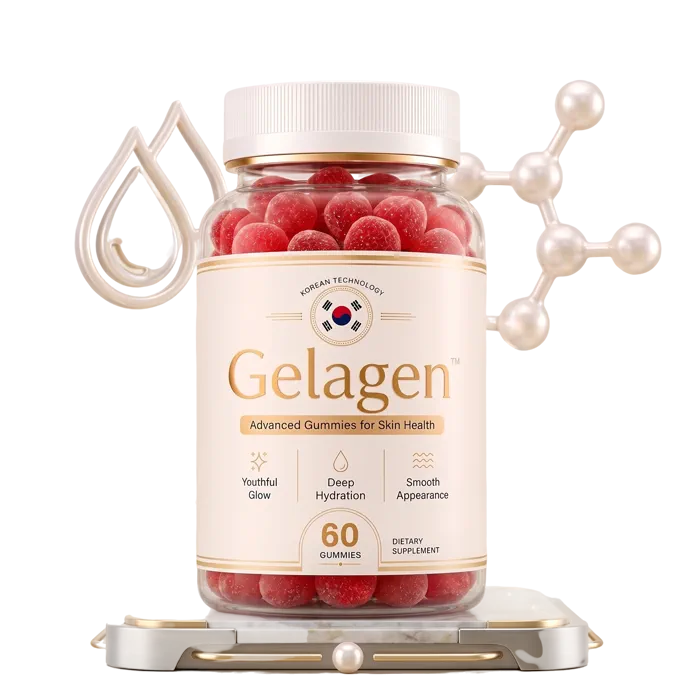
- Built for nails, hair and skin: biotin plus the B-vitamin team your body uses for normal keratin production and cell renewal.
- Easy to keep up: two gummies a day, at the label serving, alongside your 2-minute oil habit.
- Clear pricing: $79 per bottle for two bottles ($158), $69 per bottle for three ($207) or $49 per bottle for six ($294); the 3- and 6-bottle bundles ship free.
- Low-risk to try: made in an FDA-registered US facility, a one-time purchase with no subscription, and a 60-day money-back guarantee.
Free habits protect the nail you have. Gelagen supports the nail you are growing. Together, they are the complete answer to weak nails.
Frequently asked questions
How can I strengthen my weak nails fast?
Start with the free steps today: keep nails short, file in one direction, and rub cuticle oil or an ointment such as petroleum jelly into the nails after every hand wash. These protect the nail you already have within days. The nail itself only renews as it grows, which takes several months, so stronger new nail appears gradually from the base.
What can I put on my nails to strengthen them?
Moisture helps most: cuticle oil, petroleum jelly or a thick hand cream rubbed into the nail and the skin around it, especially after washing and at night. Many people also like a strengthening polish as a protective layer, but take polish-free breaks and use an acetone-free remover. If nothing helps, a dermatologist can suggest prescription options.
Does biotin strengthen nails?
Biotin is one of the B-vitamins your body uses for normal keratin production, and research on brittle nails is one of the reasons it became popular. It works best as steady daily support alongside a balanced diet, at the label serving. Give it 8 to 12 weeks, because nails grow slowly.
Why are my nails suddenly weak and bendy?
Common reasons are frequent hand washing or cleaning without gloves, dry winter air, gel or acrylic removal, harsh removers, and a diet low in protein or iron. Sudden changes in color or shape, or weak nails with fatigue or hair loss, should be checked by a doctor.
How long does it take to strengthen nails?
Fingernails grow roughly 3 to 3.5 mm a month. You can protect existing nails within days, but a nail grown under your new routine needs about 8 to 12 weeks to be clearly visible and four to six months to reach the tip.
Can I use Gelagen with cuticle oil and nail polish?
Yes. A daily gummy works from the inside and oil or polish work on the outside, so they do not compete. Gelagen provides Biotin, B5, B6, B12 and Folate in two gummies a day. If you are pregnant, breastfeeding or take medication, check with your doctor before starting any supplement.
The bottom line
Strengthening weak nails is a ladder, not a single product. Start today with short nails, one-direction filing and oil after every wash. Spend a week cutting down water, harsh removers and gel stress. Adjust your kitchen, nightstand and plate so the good habits run on autopilot. Then complete the routine from the inside with a daily gummy built for keratin, and give the new nail the 8 to 12 weeks it needs to show.
This article is general information, not medical advice, and it does not replace a visit to your doctor or dermatologist. Tips on moisturizing, filing, gloves and manicure breaks follow the American Academy of Dermatology’s public nail-care guidance.